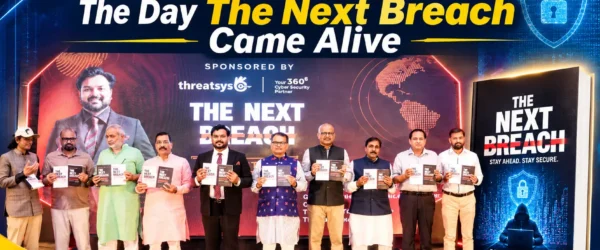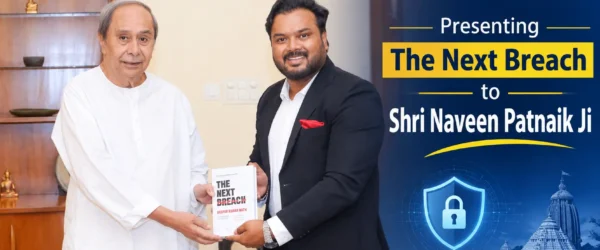

The next breach won’t break in. It will be invited. This time, we’ll be waiting.
The digital world has become an inseparable part of our lives. From online banking and digital payments to education, healthcare, communication and business operations, we depend on technology every day. While technology has created opportunities that were once unimaginable, it has also exposed us to risks that many people still do not fully understand.
Cybercrime is no longer a distant threat affecting only large corporations or government institutions. It reaches ordinary people through fraudulent calls, phishing messages, fake job offers, identity theft, digital arrest scams and increasingly sophisticated forms of online manipulation.
A student can unknowingly expose personal information. A family can lose its savings to a fraudulent banking call. An employee can accidentally compromise confidential organisational data. Sometimes, a single moment of misplaced trust can have consequences that last for years.
In my more than 15 years in cybersecurity, I have come to realise that technology alone cannot solve this problem. We can develop stronger security systems, deploy advanced monitoring tools and build sophisticated defences, but if people do not understand the risks surrounding them, important gaps will remain.
Cybersecurity must begin with awareness.
This belief is the foundation of The Next Breach, an initiative dedicated to making cybersecurity knowledge more accessible and helping individuals and organisations understand the realities of modern cybercrime.
Through awareness, education and practical knowledge, the objective is to encourage people to recognise threats, question suspicious activities, make informed decisions and become more responsible digital citizens.
Why Cybersecurity Awareness Matters More Than Ever
Cybercriminals are constantly adapting. Their methods are becoming more convincing, their operations increasingly organised and their ability to exploit human behaviour more sophisticated.
Artificial intelligence has introduced another dimension to this challenge. Voice cloning, deepfakes and AI-generated impersonation can make fraudulent communication appear remarkably genuine.
Consider some situations that are becoming increasingly familiar:
- Digital Arrest Scams: Criminals impersonate police officers or government officials, using threats and fake documents to intimidate victims.
- Phishing and Banking Fraud: Fake messages, websites and calls are designed to steal financial credentials and personal information.
- AI Voice Cloning: Fraudsters imitate familiar voices to manipulate people into making urgent payments or sharing sensitive information.
- Fake Job and Internship Offers: Students and job seekers are targeted through fraudulent recruitment messages and requests for money or personal details.
- Corporate Impersonation: Employees receive fraudulent instructions that appear to come from senior management or trusted business partners.
These incidents demonstrate that cybercrime is not exclusively a technical challenge. It is also a social and human challenge.
People need to understand how these attacks work, why they are effective and what steps they can take to protect themselves.
Cybersecurity awareness should not be limited to IT professionals. It should be part of everyday digital life, just like road safety, financial literacy and personal safety.
The Next Breach: Turning Cybersecurity Knowledge into Public Awareness
The idea behind The Next Breach is straightforward: make the complex world of cybersecurity understandable to everyone.
Understanding how cybercriminals operate is essential, but knowing how to prevent, detect and respond to their activities is equally important.
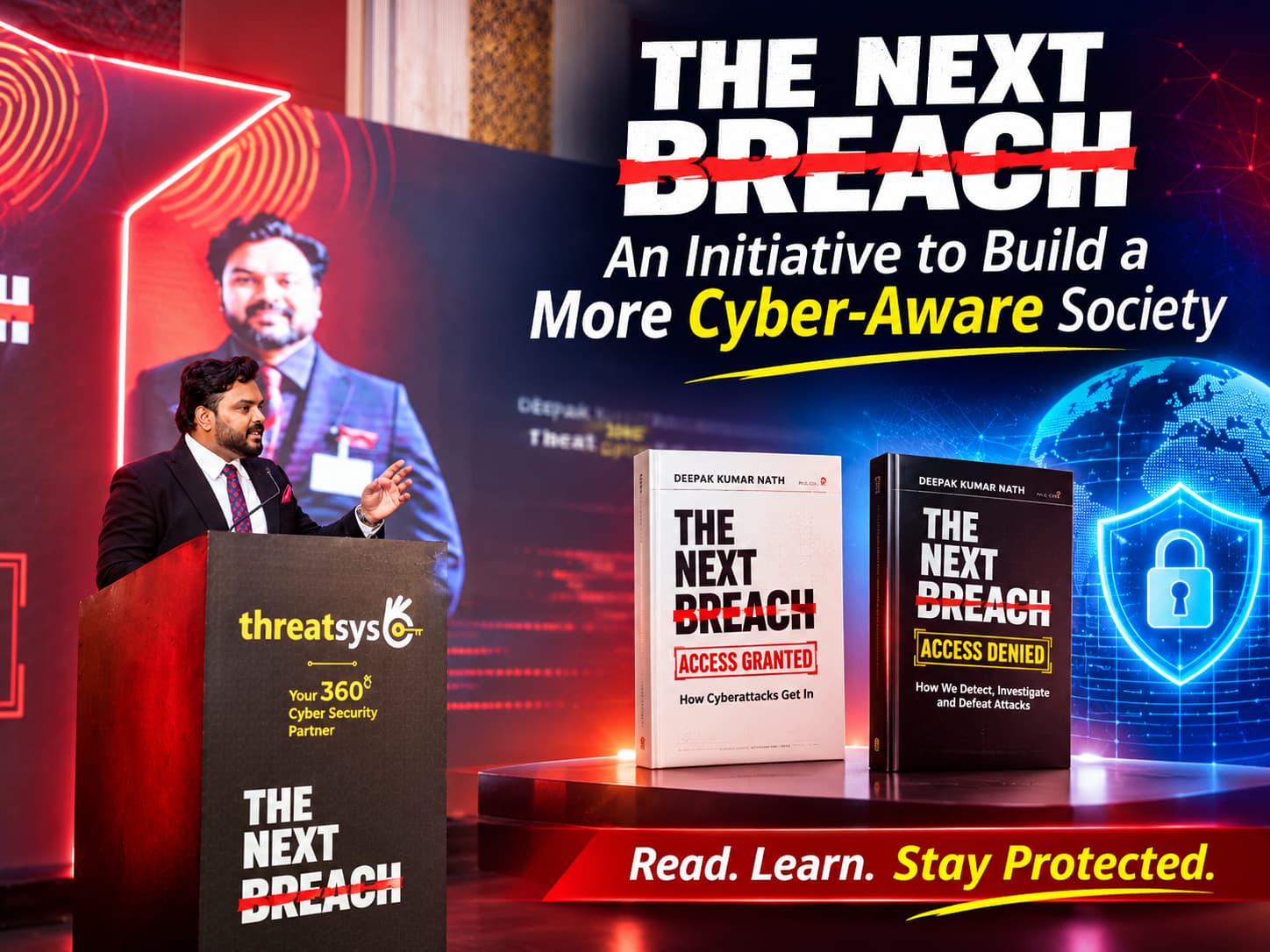
To communicate these two sides of cybersecurity, I developed a two-book educational series:
- Book One – Access Granted: Understanding how cybercriminals exploit people, systems and technology to gain access.
- Book Two – Access Denied: Understanding how cybersecurity professionals detect, investigate, respond to and defend against cyberattacks.
Together, these books provide a practical learning journey, taking readers from understanding the attacker’s mindset to exploring the strategies and technologies used in cyber defence.
Book One: Access Granted
How Cyberattacks Get In, and Why We Let Them
Access Granted explores cybersecurity from the attacker’s perspective. It examines how cybercriminals identify weaknesses, manipulate human behaviour and exploit vulnerabilities in digital systems.
One of the biggest misconceptions about hacking is that attackers always need advanced technical skills to compromise someone. In reality, they often succeed by exploiting trust, urgency, fear and human error.
The book covers several important areas:
- The Psychology of Cybercrime: Understanding how attackers use fear, urgency, curiosity and trust to manipulate victims.
- Phishing and Online Scams: Recognising fraudulent emails, websites, messages and banking scams designed to steal passwords, OTPs and personal information.
- Digital Arrest Scams: Understanding how criminals impersonate law enforcement and government authorities to intimidate and extort victims.
- AI Voice Cloning and Deepfakes: Exploring how artificial intelligence makes impersonation attacks increasingly convincing.
- From Jamtara to Myanmar: Understanding how cybercrime has evolved into organised, cross-border criminal operations.
- Ransomware, Stolen Data and the Dark Web: Learning how compromised information can be exploited long after an initial breach.
- The Attacker’s Mindset: Exploring how ethical hacking and authorised security testing help identify vulnerabilities before malicious actors exploit them.
Inside the Book:
- 15 informative chapters.
- Three illustrated Heist Files based on real-world incidents.
- Shield Up checklists for practical cybersecurity awareness.
- Red Flags to help readers recognise suspicious activities.
- Myth vs Reality sections to address common misconceptions.
- 60-second recaps for quick learning and revision.
The 410-page paperback is available in black-and-white and full-colour editions.
The objective of Access Granted is to help readers understand how cybercriminals operate, why people become victims and how greater awareness can reduce everyday digital risks.
Book Two: Access Denied
How We Detect, Investigate and Defeat the Next Attack
Understanding how cybercriminals gain access is only half the journey. The next question is what happens after an attack begins.
Who identifies suspicious activity? How do investigators reconstruct an incident? What should an organisation prioritise during the first minutes of a ransomware attack?
Access Denied explores the defensive side of cybersecurity, introducing readers to the people, technologies and processes involved in detecting and responding to cyber threats.
The book covers several critical areas:
- Inside the Security Operations Centre (SOC): Understanding how security analysts monitor systems, investigate unusual activity and identify potential attacks.
- The First 30 Minutes After Ransomware: Exploring incident assessment, threat containment, evidence preservation, communication and recovery coordination.
- Digital Forensics: Learning how investigators reconstruct cyber incidents using devices, system logs and network records while preserving digital evidence.
- Cybersecurity Incident Response: Understanding how organisations prepare for, contain, investigate and recover from security incidents.
- AI in Cyber Defence: Exploring how artificial intelligence supports security operations, threat detection and alert prioritisation.
- Cloud Security and Emerging Threats: Understanding risks associated with cloud misconfigurations, compromised identities, insecure APIs and connected devices.
- Nation-State Cyber Threats: Examining the relationship between cybersecurity, national security and the protection of critical infrastructure.
Through practical explanations and real-world scenarios, Access Denied aims to help readers understand how cybersecurity professionals identify threats, investigate incidents and strengthen digital defences.
Why Two Books? Understanding Both Sides of Cybersecurity
Cyberattack and cyber defence are closely connected, but they are not the same discipline.
Someone who understands phishing should also understand how security teams detect compromised accounts. Someone who learns about ransomware should know how incident response and recovery work.
That is why I chose to approach cybersecurity through two complementary books.
| Book One | Book Two |
| Access Granted | Access Denied |
| Understanding the attacker | Understanding the defender |
| How attacks happen | How attacks are detected |
| Cybercrime and exploitation | Investigation and response |
| Human manipulation and vulnerabilities | Security operations and defence |
Together, the series offers:
- Two complementary cybersecurity books.
- 35 chapters covering modern cyber threats and defence.
- Seven illustrated Heist Files.
- Practical cybersecurity checklists and learning resources.
- A reader-friendly approach to cybercrime awareness and digital security.
The objective is to provide a complete learning journey, from understanding how cyberattacks happen to learning how they can be detected, investigated and prevented.
Who Needs Cybersecurity Awareness?
Building a cyber-aware society requires participation from everyone. Cybersecurity is not the responsibility of one department, profession or institution.
1. Students and Young Digital Citizens
Young people are among the most active users of digital platforms. Understanding online fraud, privacy, identity protection and responsible internet use can help them develop safer digital habits early in life.
2. Parents and Families
Families need to recognise fraudulent calls, financial scams, impersonation attempts and other threats that can affect their personal and financial security.
3. Working Professionals
Employees interact with organisational systems, confidential information and cloud platforms every day. A better understanding of phishing, social engineering and data protection can help prevent avoidable security incidents.
4. Business Leaders and Entrepreneurs
Organisations must recognise that cybersecurity is directly connected to business continuity, customer trust and operational resilience. Building a security-conscious workplace requires awareness at every level.
5. Police Officers and Law Enforcement
As cybercrime continues to evolve, understanding digital fraud, impersonation techniques, online criminal activity and digital evidence becomes increasingly important for effective investigation.
The larger objective is to make cybersecurity awareness a shared responsibility rather than a specialised subject understood by only a few.
From Cybersecurity Experience to a Larger Social Responsibility
My journey in cybersecurity spans more than 15 years. As Founder of Threatsys Technologies, I have had the opportunity to work with governments, enterprises, banks and healthcare organisations.
Over this period, I have:
- Served as a virtual CISO for more than 50 organisations.
- Trained over 50,000 students and police officers.
- Participated in more than 200 TEDx and keynote events.
- Received recognition in the security research Halls of Fame of Facebook, Microsoft, Mastercard and Sony.
These experiences have reinforced an important lesson: a secure digital environment cannot be built through technology alone.
It requires informed citizens, responsible businesses, capable law enforcement, skilled security professionals and continuous education.
The Next Breach represents an extension of that responsibility. It is an effort to take the knowledge and lessons gained through years of cybersecurity work beyond organisational boundaries and make them accessible to a wider community.
Building a Culture of Cyber Safety
Cybersecurity awareness should not be a one-time activity conducted after a major incident. It should become a continuous part of how we learn, communicate and interact with technology.
As artificial intelligence, digital payments, cloud computing and connected devices become increasingly integrated into our lives, the nature of cyber threats will continue to change.
Our approach to digital safety must evolve accordingly.
Everyone can contribute to a safer digital environment by following a few essential practices:
- Verify Before Trusting: Independently verify unexpected messages, calls and payment requests.
- Think Before Clicking: Avoid unfamiliar links and suspicious attachments.
- Protect Personal Information: Never share passwords, OTPs or sensitive financial details with unverified contacts.
- Strengthen Digital Security: Use strong passwords and multi-factor authentication wherever possible.
- Report Suspicious Activity: Do not ignore potential scams or security incidents.
- Stay Informed: Continuously learn about emerging cyber threats and safe digital practices.
- Take Responsibility: Understand that cybersecurity is everyone’s responsibility.
Small, informed decisions can prevent significant consequences.
If a student learns to recognise a phishing attempt, if a parent avoids a digital arrest scam, if an employee prevents a data leak or if an organisation responds effectively to a cyber incident, awareness has made a meaningful difference.
That is the impact we want to encourage.
Be Part of a More Cyber-Aware Community
We often start talking about cybersecurity after something has gone wrong. We discuss stolen information, financial losses, ransomware and compromised systems, asking why the warning signs were missed.
But what if we started earlier?
What if more people understood how cybercriminals operate before becoming victims? What if digital safety became a regular part of education? What if awareness was treated as an essential life skill?
That is the vision behind The Next Breach.
The objective is not simply to explain cybersecurity. It is to encourage people to think differently about their digital lives, recognise potential threats and take responsibility for their safety and the safety of others.
Through the Access Granted and Access Denied series, I hope to contribute to a broader conversation about cybercrime prevention, digital responsibility and the importance of cyber defence.
The next breach won’t break in. It will be invited. This time, we’ll be waiting.
I invite students, parents, professionals, educators, business leaders and everyone who believes in a safer digital future to be part of this awareness journey.
Explore the initiative, understand its mission and join the conversation:
Visit The Next Breach – Official Cybersecurity Awareness Initiative
Two books. 35 chapters. Seven illustrated Heist Files. One shared responsibility: building a safer digital world.
Because a cyber-aware society is a stronger society.
Deepak Kumar Nath | Cybersecurity Leader, Ethical Hacker, Entrepreneur and Author of The Next Breach
About the Author
Deepak Kumar Nath — MD & CEO, Threatsys Technologies; Entrepreneur, Cybersecurity Expert, Lead Auditor, TedxSpeaker; CISA, CISSO, CCISO, CPENT, LPT, CIPP, CPTE, CEH, ISO 27001 LA, CHFI, ECSA.