
New Delhi held the world’s attention this September as leaders from eleven major economies gathered for the 18th BRICS Summit. For me, it was more than a landmark global event; it was a chance to represent India, contribute to conversations on technology and cybersecurity, and see global cooperation take shape up close.
As CEO of Threatsys, I’ve spent years building solutions that help organizations secure their digital infrastructure. A platform like BRICS pushes you to think beyond any single organization to see cybersecurity as something woven into digital trust, economic cooperation, and national interest all at once.
Understanding BRICS and Its Growing Global Role
BRICS is a coalition of major emerging economies collaborating on trade, finance, technology, and global policy. It began as an acronym for Brazil, Russia, India, China, and South Africa, and has since grown into a bloc of eleven full member nations.
At its core, BRICS gives emerging economies a stronger, shared voice in global affairs. Conversations around economic cooperation, payment infrastructure, technology, and reform of global institutions have only made the group more consequential over time.
What I find most compelling is the intersection of economic growth and technology. As nations grow more digitally connected, cybersecurity stops being a back-office IT concern; it becomes part of the foundation that economic cooperation and digital trust are built on.
The Journey of BRICS
BRICS traces back to 2006, when foreign ministers from Brazil, Russia, India, and China met on the sidelines of the UN General Assembly in New York. The first official BRIC Summit followed in 2009 in Yekaterinburg, Russia. South Africa joined in 2010 turning BRIC into BRICS and attended its first summit the following year.
The bloc expanded significantly in 2024, when Egypt, Ethiopia, Iran, Saudi Arabia, and the UAE became full members. Indonesia joined in 2025, bringing the total to eleven. That expansion has given BRICS a genuinely global footprint, spanning Asia, Africa, the Middle East, and Latin America.
The New Delhi Chapter
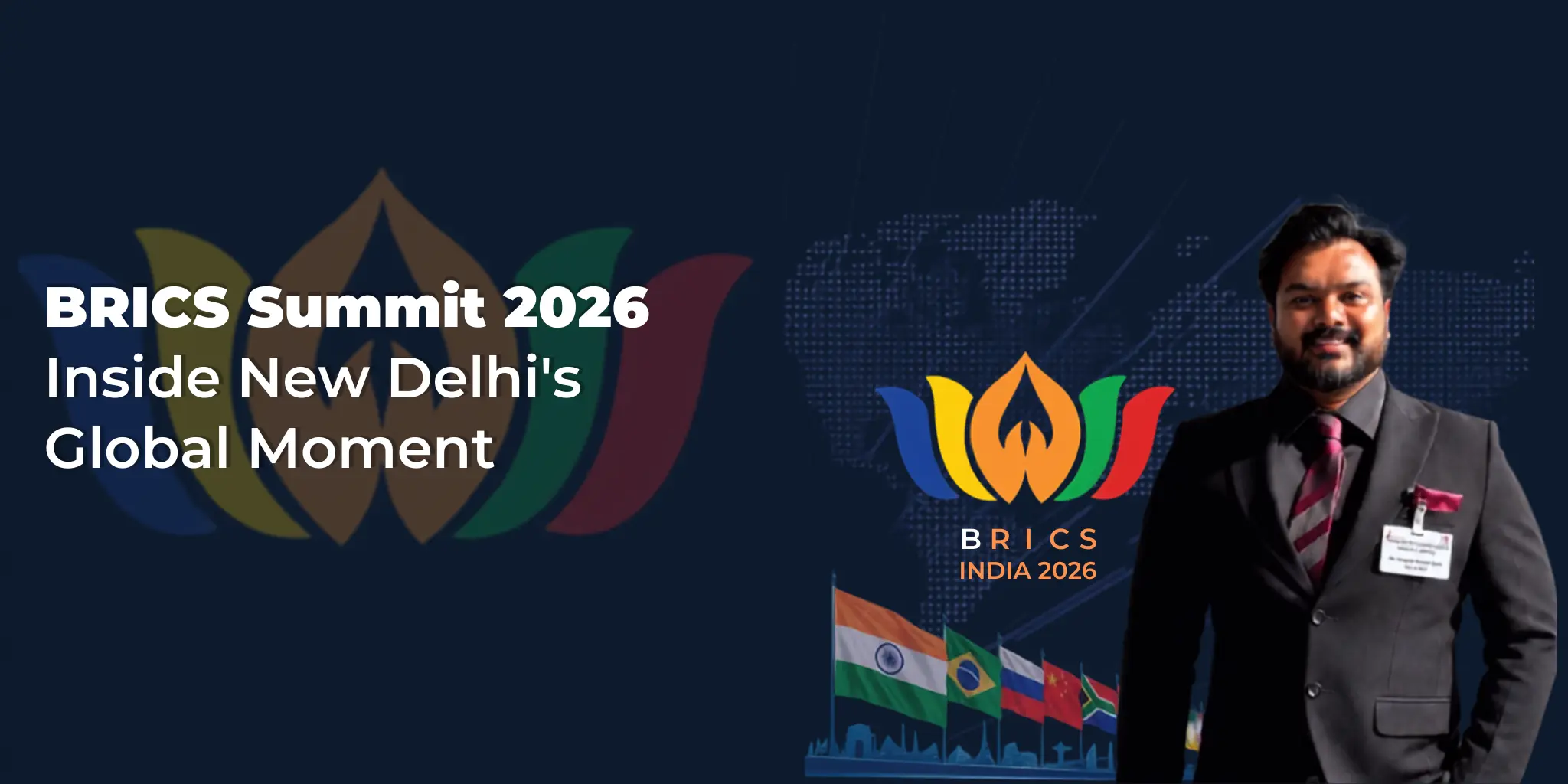
The 18th BRICS Summit ran from September 10–13, 2026, at Bharat Mandapam in New Delhi, with India holding the chairship for the year. Its theme “Building for Resilience, Innovation, Cooperation, and Sustainability” captured much of what’s shaping the digital world right now: resilience against increasingly sophisticated cyber threats, innovation driven by AI and emerging technologies, cooperation across national boundaries, and sustainability guiding how economies and technologies evolve together.
The Cybersecurity Lens
What struck me most at the summit was how closely economic cooperation and digital infrastructure are now linked. BRICS discussions span cross-border payment systems, technology collaboration, AI governance, trade, investment, and sustainable development and every one of these areas depends on secure, trusted digital infrastructure to actually work.
Take cross-border payment systems built around local currencies and alternative settlement mechanisms: none of that delivers real economic value without strong security, resilience, privacy, and trust behind it. The same is true of AI. It’s opening up enormous opportunities, but also raising hard questions around governance, security, and data protection questions that no single government, company, or technology provider can answer alone. They require cooperation across all of them.
Being Part of BRICS Summit 2026
Being invited to participate was a meaningful moment, both personally and for the entire Threatsys team. Representing India on a stage of this scale comes with a responsibility that goes well beyond professional recognition it’s a chance to showcase what’s being built in India and to help shape conversations that will influence the future of technology and digital trust.
I’ve long believed Indian cybersecurity companies can compete and lead on the global stage. Our work with organizations across banking, fintech, government, and critical infrastructure has given us a clear-eyed view of how central security has become to modern economies. BRICS offered a chance to step back and view those same challenges through a wider, international lens.
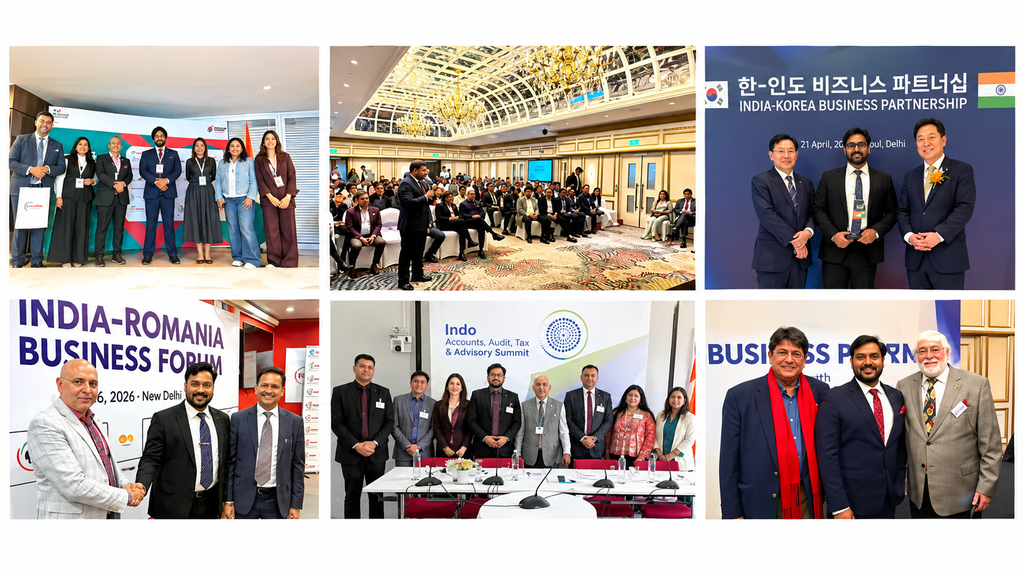
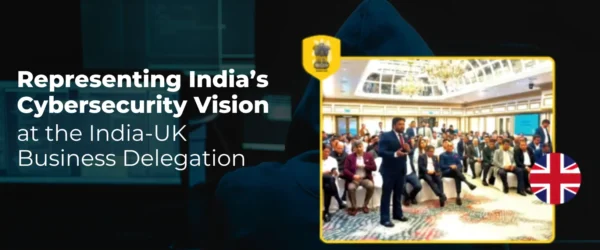
This wasn’t Threatsys’s first outing on an international platform, either. We’ve previously served as an official business delegate for India in the UK, as part of a delegation led by Union Minister Shri Piyush Goyal; represented India in France to strengthen Indo-French technology ties; and taken part in the India–Korea Business Leaders’ Dialogue in South Korea. Each of those experiences taught me something different about international collaboration and India’s growing role in the global digital economy. BRICS Summit 2026 was the latest chapter in that story.
A Full-Circle Moment at Bharat Mandapam
There was a personal thread running through the venue itself. Bharat Mandapam is where Threatsys was previously named “Best Cyber Security Company of India” and received the Atal Samman award. Returning to the same venue for a summit of this magnitude felt like a full-circle moment a reminder that these milestones aren’t really about the recognition itself, but about the journey of a company that started in India and has kept building with a global outlook.
Why Cybersecurity Matters to Global Cooperation
My biggest takeaway from BRICS is this: cybersecurity now sits squarely at the intersection of technology, business, and international cooperation. Whenever countries build new payment infrastructure, deepen technology partnerships, adopt AI, or expand cross-border digital connectivity, security has to be part of the conversation from day one not bolted on afterward.
At Threatsys, that’s the work we do vulnerability assessments and penetration testing, security audits, compliance consulting, and managed security services for organizations where trust is non-negotiable. We help teams align with frameworks like ISO 27001, SOC 2, PCI DSS, and India’s DPDP Act, and our Threatsys One AI platform brings SOC monitoring, GRC management, and application security together in one place.
The larger lesson, for me, is a simple one: digital growth and digital security have to move together, or neither one holds up.
Looking Beyond the Summit
A summit ending doesn’t mean the conversation does. The priorities, partnerships, and decisions that emerge from a platform like BRICS ripple outward into businesses and technology ecosystems long after the closing session. For cybersecurity companies, that’s an opening to collaborate, innovate, and help secure an increasingly interconnected digital world.
I believe India’s cybersecurity ecosystem has a real role to play in that future not just serving domestic organizations, but contributing expertise to international markets and technology partnerships around the world.

Final Thoughts
BRICS Summit 2026 was more than an international event for me. It reinforced why technology, cybersecurity, innovation, and global collaboration matter as much as they do. Standing on a platform representing such a significant share of the global economy was both an honor and a responsibility.
As founder and CEO of Threatsys, I see our journey as part of something bigger than building a cybersecurity company it’s about contributing to a digital ecosystem where organizations can innovate, governments can collaborate, and people can trust the technologies they increasingly rely on.
Being part of BRICS Summit 2026 gave me another opportunity to represent India’s cybersecurity capabilities on the world stage. And it’s not the end of the journey it’s another step toward the vision we’ve pursued at Threatsys all along:
Eradicating Threats Globally.
About the Author
Deepak Kumar Nath — MD & CEO, Threatsys Technologies; Entrepreneur, Cybersecurity Expert, Lead Auditor, TedxSpeaker; CISA, CISSO, CCISO, CPENT, LPT, CIPP, CPTE, CEH, ISO 27001 LA, CHFI, ECSA.