
Artificial Intelligence is transforming the cybersecurity world faster than ever before. In 2026, AI is no longer just a tool for innovation and business growth , it has become a weapon used by both cybersecurity professionals and cybercriminals.
While businesses are using AI to strengthen their security systems, hackers are leveraging the same technology to launch smarter, faster, and more dangerous attacks. This has created a new digital battlefield where technology is evolving on both sides simultaneously.
The real question today is no longer “Is AI changing cybersecurity?”
The question is:
“Who is actually winning — AI or Hackers?”
How Hackers Are Using AI in 2026
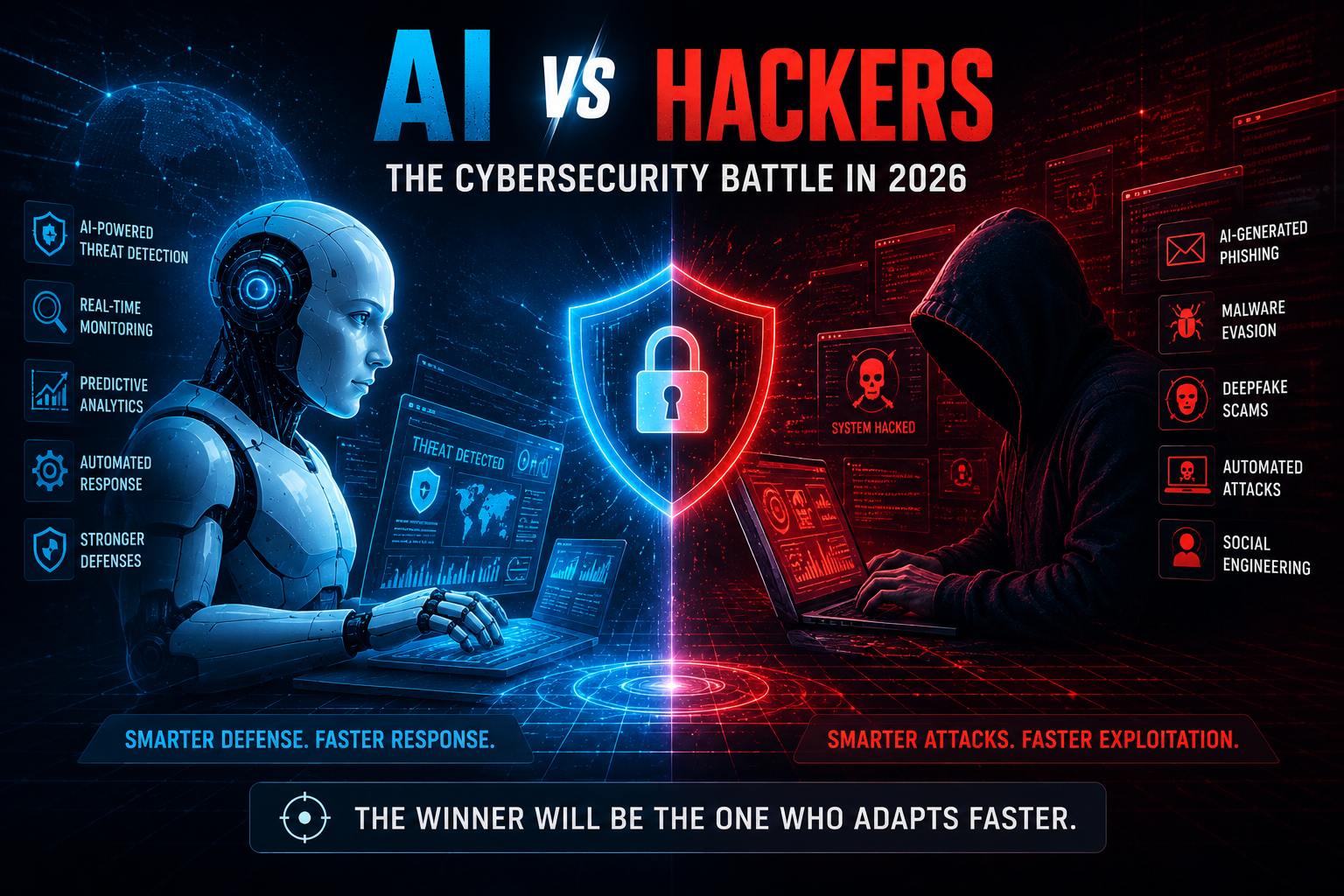
Cybercriminals are using AI to automate and scale cyberattacks faster than ever before.
Hackers are using AI to:
- Create phishing emails that look highly genuine and difficult to detect.
- Generate malware variants that bypass traditional security tools.
- Scan systems quickly and identify weak points within minutes.
- Launch deepfake scams using cloned voices and fake videos.
- Automate social engineering attacks with personalized targeting.
How Businesses Are Using AI for Cybersecurity
Organizations are also leveraging AI to improve cyber defense and threat detection.
Businesses are using AI to:
- Detect suspicious activities in real time across networks and systems.
- Analyze security threats faster and reduce response time significantly.
- Automate threat monitoring and reduce manual security workload.
- Predict cyber risks using machine learning and behavioral analysis.
- Strengthen endpoint, cloud, and application security continuously.
So, Who’s Winning?
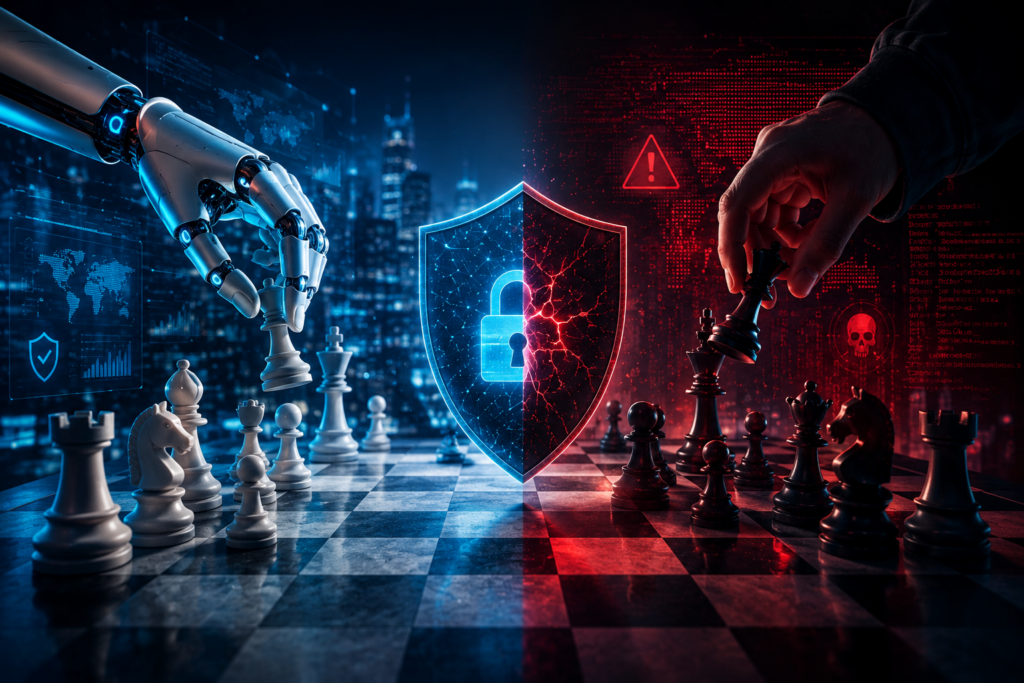
The reality is that both hackers and cybersecurity teams are evolving at an incredible pace. Cybercriminals are using AI to automate attacks and exploit vulnerabilities faster than ever before, while organizations are leveraging AI to strengthen detection and improve cyber defense mechanisms.
However, the organizations that are truly staying ahead are the ones investing beyond just technology. Companies combining AI-powered security tools with continuous monitoring, employee awareness, and proactive cybersecurity strategies are building a much stronger defense against modern threats.
Cybersecurity today is no longer about reacting after an attack happens. It is about staying prepared before the attack even begins.
The businesses struggling the most are usually the ones still relying on outdated security approaches while attackers continue evolving with advanced AI-driven tactics.
The Biggest Risk: Human Error
Even the most advanced AI-powered security systems cannot completely eliminate human mistakes. One careless click on a phishing email or one weak password can still create a major security breach.
Cybercriminals understand this very well, which is why social engineering attacks remain highly successful. Employees often unknowingly share sensitive information, reuse passwords across multiple accounts, or ignore important security warnings during busy work schedules.
This is why cybersecurity awareness has become just as important as advanced security technology. Businesses that regularly educate and train their employees are significantly better prepared to prevent cyber incidents before they escalate into major attacks.
In 2026, building a cyber-aware workforce is no longer optional , it is essential.
Final Thoughts
Artificial Intelligence is reshaping the cybersecurity landscape from both sides. Hackers are becoming more automated, intelligent, and sophisticated with AI-powered attack methods, while organizations are using the same technology to build faster and stronger defenses.
The future of cybersecurity will not simply depend on who has better technology. It will depend on who can adapt faster to the rapidly changing threat landscape.
Businesses that continue evolving their cybersecurity strategies, investing in awareness, and adopting modern AI-driven security solutions will be far better prepared for the future.
“In the age of AI, the strongest defense belongs to the fastest learner.”
About the Author
Deepak Kumar Nath — MD & CEO, Threatsys Technologies; Entrepreneur, Cybersecurity Expert, Lead Auditor, TedxSpeaker; CISA, CISSO, CCISO, CPENT, LPT, CIPP, CPTE, CEH, ISO 27001 LA, CHFI, ECSA.