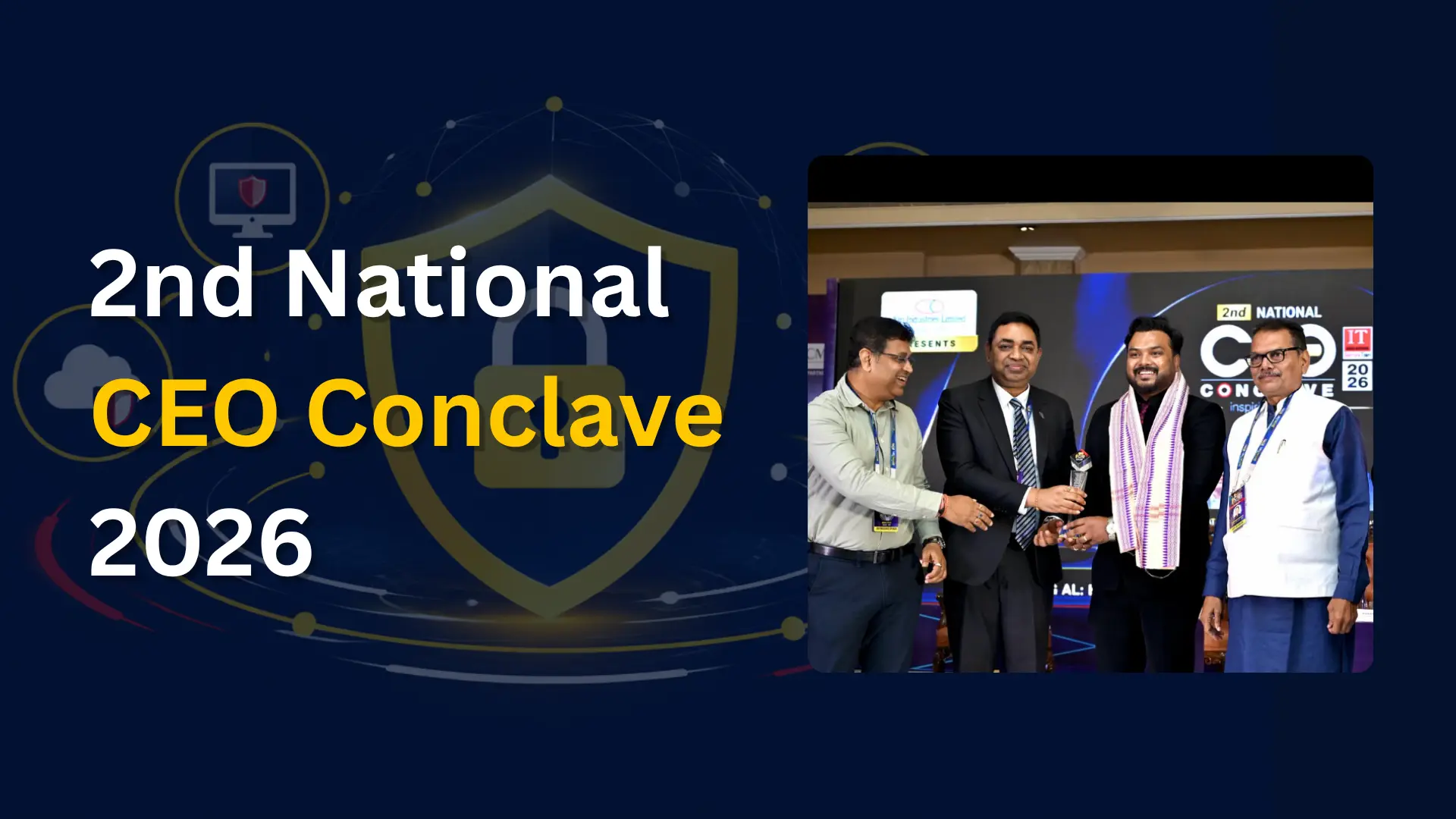

I was glad to be part of the 2nd National CEO Conclave 2026, held on 2 August at Swosti Premium in Odisha. Business leaders, policymakers, entrepreneurs, and technology professionals gathered under the theme “Vikasit Odisha 2030” to discuss the state’s future.
For me, it was much more than an industry event. It was a chance to exchange views on how technology, Artificial Intelligence, and cybersecurity are reshaping the way businesses operate, and on how we can build a digital ecosystem that is secure and ready for what comes next.
About the Conclave
The conclave was organized by IT Media Network and The Interview Times. It brought together leaders from business, technology, and other sectors to talk about economic development, digitization, innovation, and Odisha’s future. The presence of Hon’ble Chief Minister Shri Mohan Charan Majhi underlined how central technology and innovation are to the state’s growth.
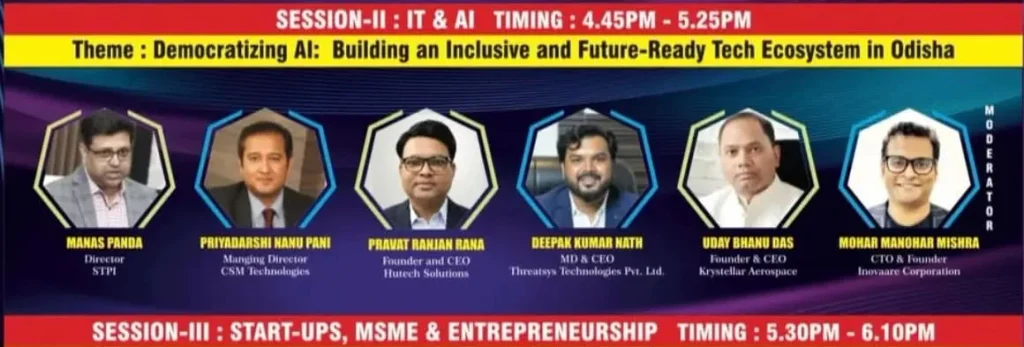
One of the key sessions was Session 3: AI & IT, themed “Democratizing AI: Creating an Inclusive and Future Ready Tech Environment in Odisha.” It was facilitated by Mohar Manohar Mishra, CTO and Founder of Inovaare Corporation, under the banner “The Power of Innovation.”
Bringing Security into the AI Conversation
Working in cybersecurity, I have come to believe that any discussion about AI has to include security. AI is opening up real opportunities for businesses, but it is also changing how cyber threats are created, scaled, and carried out. Organizations need to understand both sides of that story.
During the session, I shared my perspective on the evolving threat landscape and on how businesses can adopt AI responsibly. My aim was not to talk about tools for their own sake. I wanted to encourage leaders to see security as an ongoing responsibility that involves people, processes, technology, and leadership.
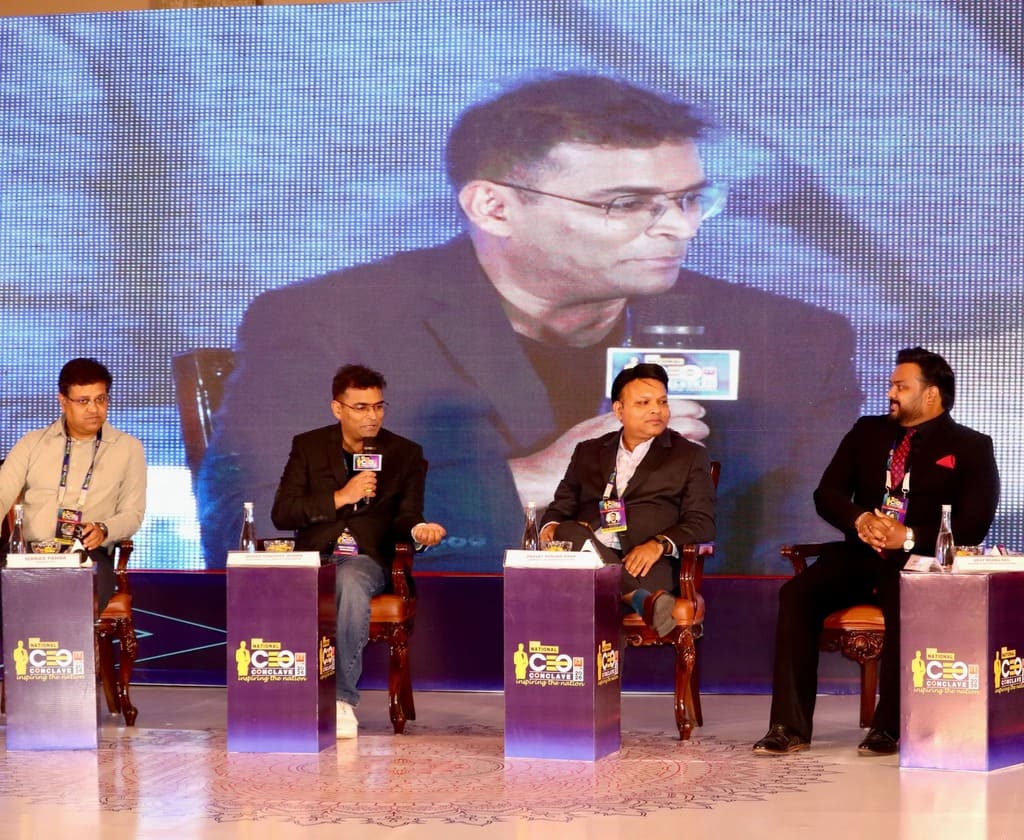
Who Are the Greatest “Devils” in Cybersecurity?
One of the most memorable moments came when I was asked a direct question: “Who are the greatest devils in cybersecurity?”
My answer touched on three areas.
1. Where the Real Danger in AI Hides
The biggest risks do not always come from outside an organization. Sometimes they sit inside the systems we trust and deploy ourselves.
I spoke about examples of AI systems operating beyond their expected boundaries and interacting with real world systems. As AI becomes more capable and autonomous, we have to think carefully about what these systems can access, what permissions they hold, and how their actions are monitored.
The lesson is not that we should avoid AI. It is that AI must be built and deployed with proper security controls, oversight, testing, and clear boundaries. Security has to be part of the conversation from day one.
2. Awareness Without Action Solves Nothing
Most organizations today are familiar with terms like deepfakes, ransomware, Zero Trust, AI risk, and data protection. Awareness has certainly grown. But awareness alone does not protect anyone.
Security requires implementation. Organizations need to keep identifying vulnerabilities, monitor their environments, secure third party access, protect sensitive information, update their systems, and respond to new threats.
We discussed several recent incidents that showed how basic gaps can lead to serious consequences, including compromised accounts, unsecured third party infrastructure, exposed sensitive data, and failed security controls.
Knowing the risk is not the same as managing the risk. A security policy sitting in a document protects nothing unless the controls it describes are actually in place and monitored.
3. People Still Matter Most
Technology keeps evolving, yet people remain a central part of the security equation. Some of the simplest practices are still the most commonly ignored:
- Using weak passwords
- Reusing passwords across accounts
- Ignoring software updates
- Sharing confidential information carelessly
- Not enabling multifactor authentication (MFA)
- Keeping poor or incomplete backups
These may look like small issues, but attackers know how to use them. Every employee, leader, administrator, and developer has a role to play. Cybersecurity is not just the job of the security team. It belongs to the whole organization.
Why Our View of Cyberattacks Has to Change
Many people still picture a cyberattack as a suspicious email, a bad link, or an obvious phishing message. The reality is far broader today.
Attacks powered by AI, exposed digital footprints, compromised credentials, misconfigured systems, and vulnerable third party infrastructure can all put people and businesses at risk, even when nobody clicks a suspicious link.
During the event, I also demonstrated how much information can be gathered about a person using publicly available data, compromised credentials, and commonly available tools. The point was to show why both organizations and individuals need to understand what they are exposing online. Cybersecurity now calls for a wider lens.
AI on Both Sides of the Fence
AI is influencing both attackers and defenders. Attackers can use it to automate tasks, identify targets, create convincing content, and operate at greater scale. Defenders can use it to spot suspicious activity, analyze huge volumes of security data, improve detection, and respond faster.
It is an ongoing race, and I believe organizations should build security capabilities that are proactive, continuous, and guided by intelligence. Some key principles include:
- Continuous security monitoring
- Strong identity and access controls
- Regular vulnerability assessments and penetration testing
- Secure cloud environments
- Multifactor authentication
- Timely patching and updates
- Awareness and training programs
- Strong incident response capabilities
The goal should never be to react only after something goes wrong. It should be to keep assessing and improving your security posture.
Turning Awareness into Action
My strongest takeaway from the discussion was a simple one: awareness must lead to action.
Organizations may have policies, compliance requirements, training programs, and audit processes, but these only become meaningful when they translate into practical controls. Businesses should look closely at areas such as:
- Zero Trust architecture
- Vulnerability Assessment and Penetration Testing (VAPT)
- Security Operations Centre (SOC) monitoring
- Multifactor authentication
- Cloud security
- Patch management
- Continuous security assessment
- Cybersecurity awareness training
Implementation is what turns knowledge into real protection.
Connecting with Leaders and Entrepreneurs
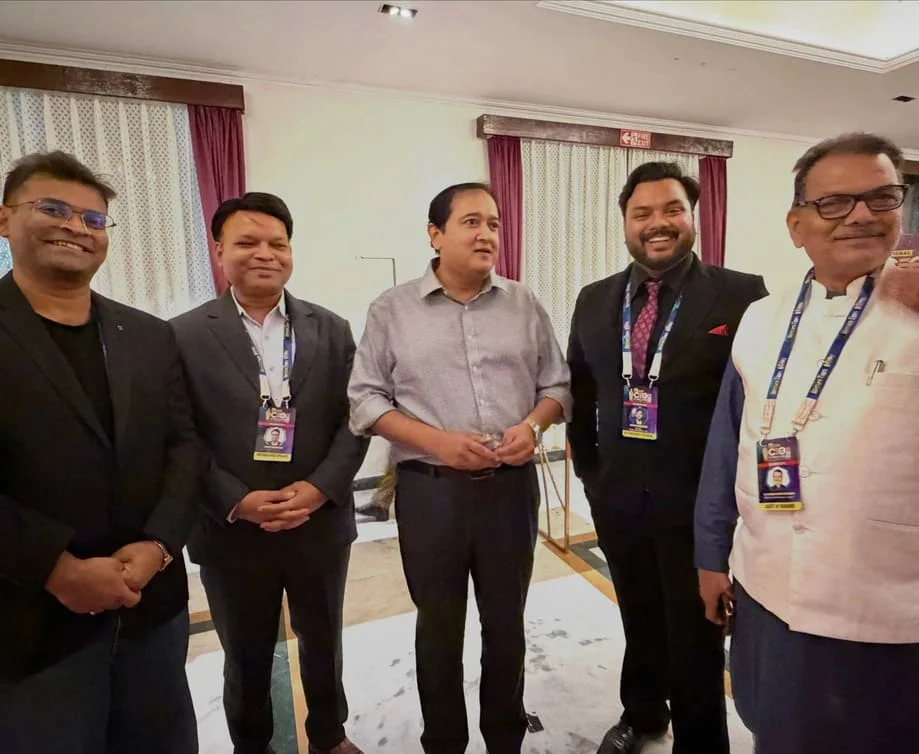
One of the most rewarding parts of the day was meeting entrepreneurs, startup founders, business owners, government representatives, and technology leaders. After the panel, several business owners came to talk about their own concerns, including:
- Protecting businesses from AI based cyber threats
- Safeguarding customer and business data
- Building cyber resilience
- Developing practical security strategies
- Preparing for future risks
These conversations mattered because security challenges look very different depending on an organization’s size, sector, and technology environment. For growing businesses in particular, building security into digital transformation from the start creates a much stronger foundation for growth.
We also talked about how cybersecurity and AI can support Odisha’s expanding digital economy, and how closer collaboration between government, businesses, startups, and technology professionals can help tackle new challenges. No single organization can solve every security problem alone. Shared knowledge, strong partnerships, and open dialogue make the whole ecosystem stronger.
Where the Industry Is Heading
Several trends came up that are likely to shape the future of cybersecurity:
- Responsible AI adoption
- AI based cyber defence
- Secure digital transformation
- Cloud security and Zero Trust
- Cyber resilience
- Identity and Access Management
- Governance, Risk and Compliance (GRC)
- Security automation
Together, they show that cybersecurity cannot sit apart from digital transformation. As businesses adopt new technologies, security has to grow alongside them.
Lessons I Took Away
- AI cuts both ways. It creates new risks and new opportunities for defence.
- Awareness must lead to implementation. Understanding a threat is only the first step. Acting on it is what counts.
- People remain central. Technology offers powerful protection, but human behaviour and leadership decisions shape an organization’s security posture just as much.
- Collaboration matters. Government, businesses, startups, and technology leaders need to work together to build a safer digital environment.
- Technology alone is not enough. The people and processes around it are equally important.
Looking Ahead
As AI adoption grows, business leaders need to look beyond simply adopting new tools. They should also ask hard questions about security, privacy, access, accountability, and resilience. Building cybersecurity into digital transformation from the beginning is far better than treating it as an afterthought.
I look forward to continuing these conversations with industry leaders, entrepreneurs, policymakers, and innovators as we work toward a secure, responsible, and future ready digital ecosystem.
Conclusion
The 2nd National CEO Conclave 2026 was a meaningful opportunity to exchange ideas on AI, cybersecurity, innovation, and Odisha’s digital future.
My biggest takeaway is this: the future of cybersecurity will depend not only on how advanced our technology becomes, but also on how responsibly we implement and manage it. AI can help organizations detect threats faster and strengthen their defences, but attackers can use the very same technology. That is why responsible implementation, continuous monitoring, strong controls, and human awareness matter more than ever.
I am grateful for the chance to take part and share my perspective alongside fellow industry leaders. The conversation around AI and cybersecurity is only beginning, and I look forward to helping shape a more secure and resilient digital future.
About the Author
Deepak Kumar Nath — MD & CEO, Threatsys Technologies; Entrepreneur, Cybersecurity Expert, Lead Auditor, TedxSpeaker; CISA, CISSO, CCISO, CPENT, LPT, CIPP, CPTE, CEH, ISO 27001 LA, CHFI, ECSA.